설명
FourStroke Engine Model with Visible Motion and Compression Ratio for Physics Classroom Teaching
Purpose
This teaching demonstration model is designed for middle school physics lessons on heat engines. It makes the fourstroke singlecylinder gasoline engine easy to observe and understand.
Key benefits
Clarifies core concepts: visually explains the basic working principle of a fourstroke singlecylinder gasoline engine and the main structure of a common singlecylinder gasoline engine.
Supports classroom teaching: helps teachers demonstrate intake, compression, power, and exhaust strokes in a way that students can follow.
Links theory to practice: shows how engine geometry and timing affect conversion efficiency through a clear depiction of compression ratio and piston clearance.
Main features
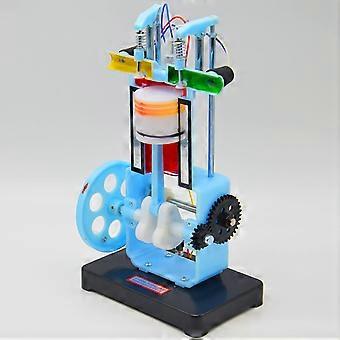
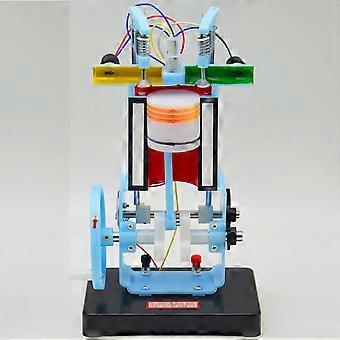
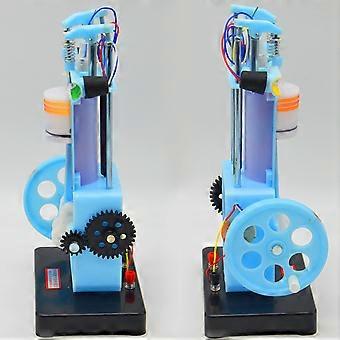
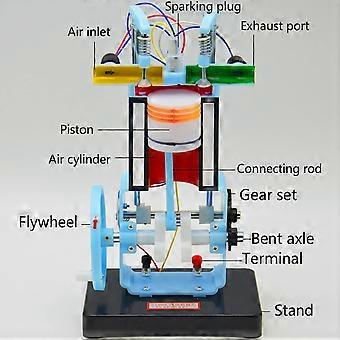
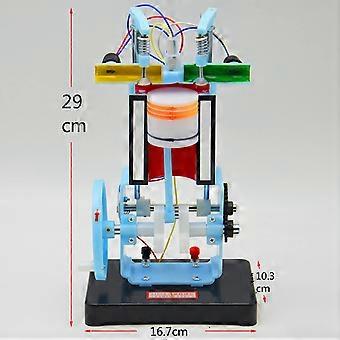
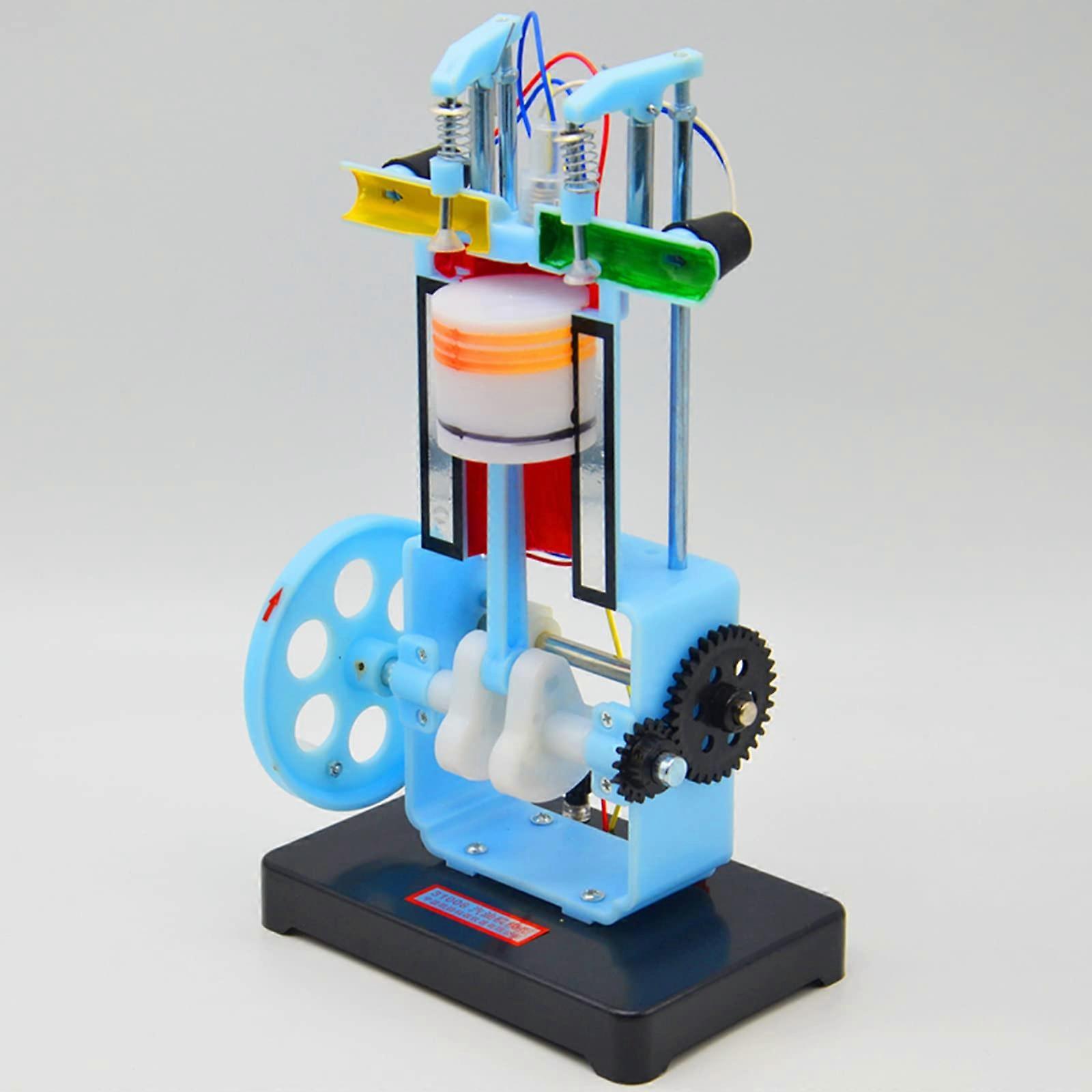
Visible components: the left side of the instrument is the flywheel; the right side shows the crank timing gear and the camshaft timing gear for direct observation of relative motion.
Fourstroke demonstration: explicitly illustrates the sequence and interaction of the four strokes used in singlecylinder gasoline engines.
Compression ratio explanation: demonstrates that a typical gasoline engine compression ratio is generally 5 to 8 and that when the piston rises to dead center a proportional clearance is left at the of the cylinder to improve conversion rates.
How this model solves teaching challenges
Makes invisible mechanisms visible: students can see gear and piston movement instead of only reading diagrams or watching video.
Improves comprehension: by observing timing relationships between flywheel, crank gear, and camshaft gear, students better grasp the cause and effect behind engine cycles.
Encourages questions and exploration: clear, step by step motion invites handson discussion and reinforces textbook concepts.
Compatibility and use
Curriculum fit: intended for the heat engine portion of middle school physics classes and similar introductory mechanics lessons.
Classroom integration: can be used with lectures, lab exercises, or teacherled demonstrations to reinforce lesson objectives.
Practical application scenarios
Classroom demonstration: teacher operates the model during a lesson on thermodynamic cycles to show each stroke and timing relationships in real time.
Lab activity: small groups observe and record piston and gear movement to link measured motion with cycle phases and compression ratio effects.
Science exhibition or open day: use the model to introduce visitors to basic engine operation and to illustrate fundamental mechanical timing.
Notes on teaching points to emphasize
Point out the flywheel on the left and the crank timing gear and camshaft timing gear on the right to show how rotational motion is converted to reciprocating motion.
Explain that a gasoline engine compression ratio is commonly between 5 and 8 and that a clearance at dead center affects the compression and overall conversion efficiency.
Use the model to demonstrate how timing and geometry influence performance and to relate these observations back to classroom theory.
This instrument provides a straightforward, reliable way to demonstrate the essential mechanics and timing of a fourstroke singlecylinder gasoline engine for middle school heat engine education.
-
Fruugo ID:
467690679-981299257
-
EAN:
6163018000999